

Peter Mark Adams
Peter Mark Adams is an author, poet, esotericist and professional energy worker specialising in the ethnography and visuality of ritual, sacred landscape, esotericism, consciousness and healing.
Peter’s esoteric non-fiction is published by Scarlet Imprint; non-fiction concerning energy healing and consciousness by Inner Traditions. Peter’s literary prose and poetry has appeared in Corbel Stone Press’ literary journal Reliquiae: Journal of Nature, Landscape & Mythology and the Bosphorus Review of Books. Reviews of esoterically related works have appeared on the dedicated esoteric book review site, Paralibrum.
A range of essays examining other than human encounters have appeared in the peer reviewed journals Paranthropology: Journal of Anthropological Approaches to the Paranormal and The Journal of Exceptional Experiences and Psychology and are available on Peter’s academia.edu page. With a background in Philosophy from the University of Liverpool, Peter pursues advanced studies on iconology and iconographic; Renaissance art and material culture with the Warburg Institute’s School of Advanced Studies in London.
Our work with Peter Mark Adams
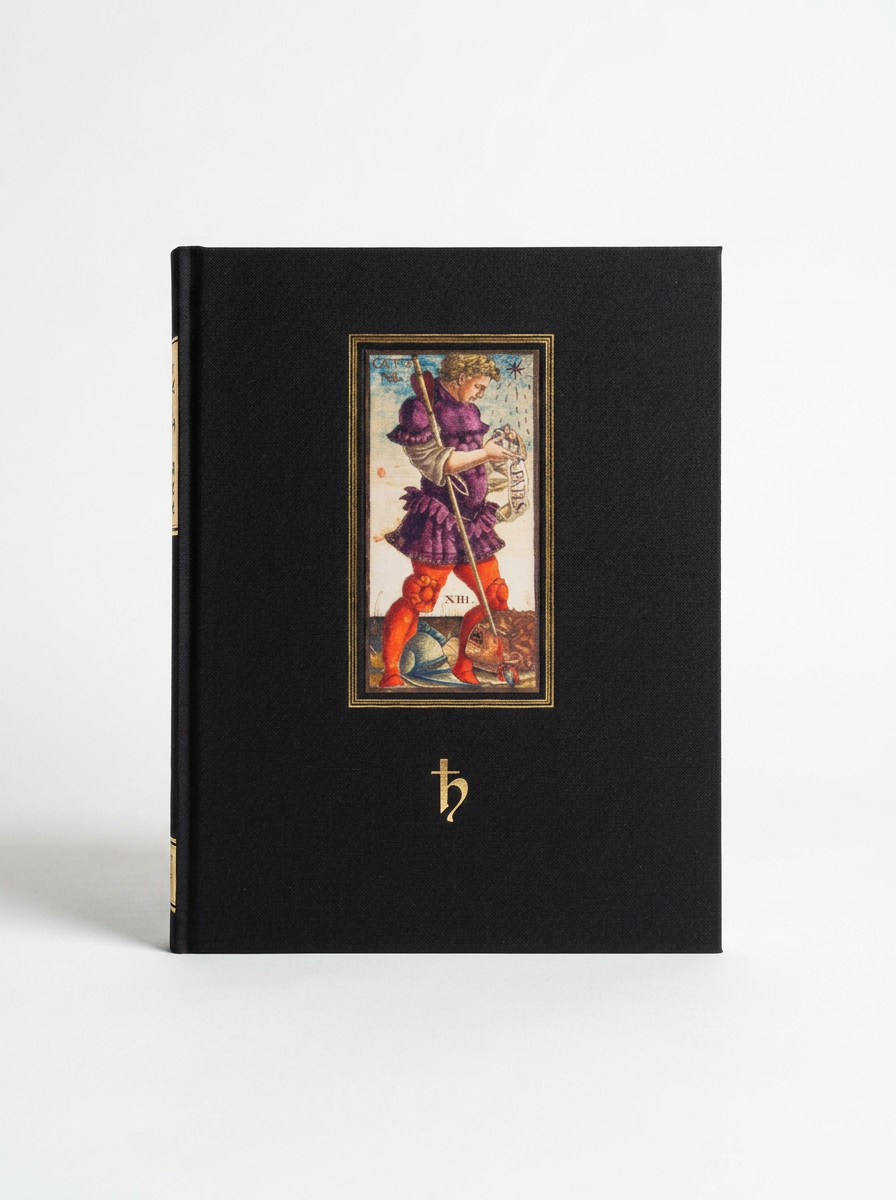
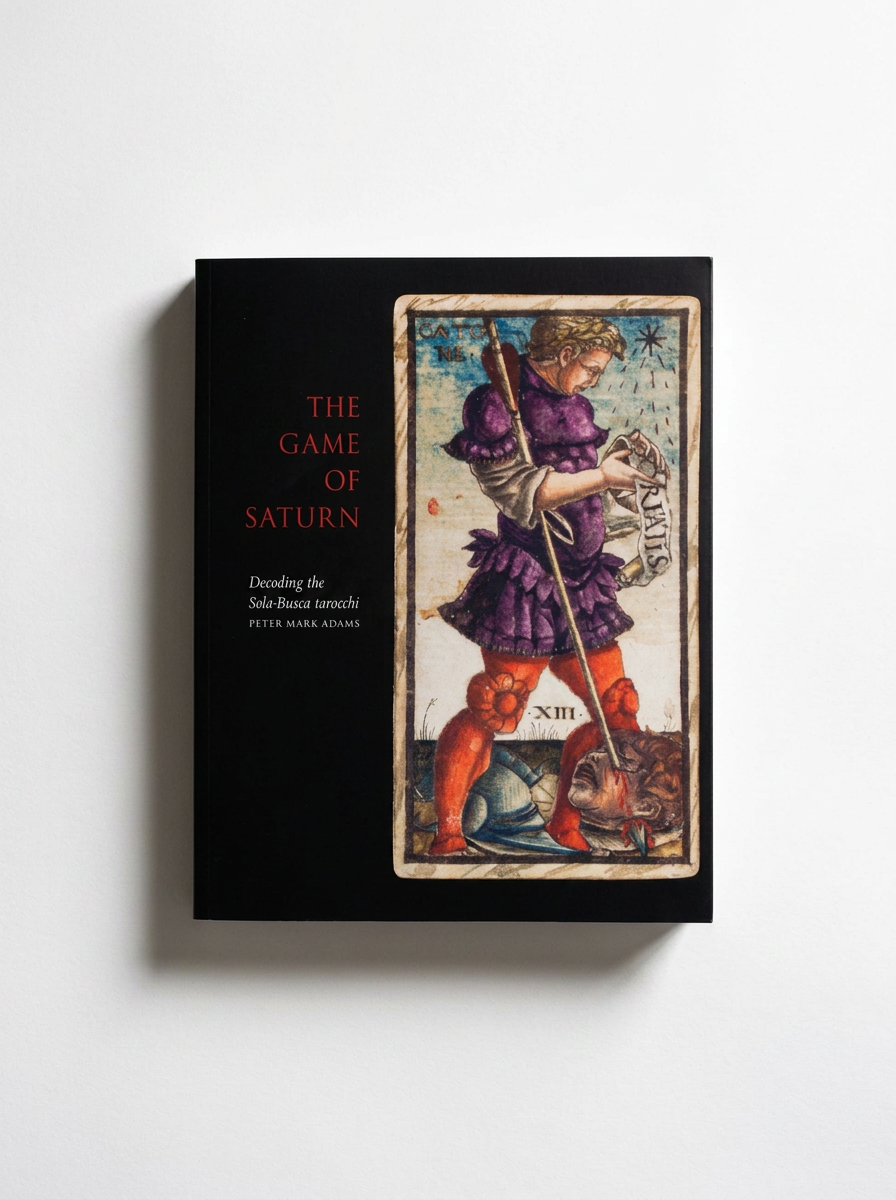
A new edition of The Game of Saturn: Decoding the Sola-Busca Tarocchi, the first full length, scholarly study of the enigmatic Renaissance masterwork. Peter Mark Adams's careful analysis reveals the existence of a pagan liturgical and ritual tradition active amongst members of the Renaissance elite and encoded within the deck's design and iconography.
4to (280 × 215 mm)
316 pp
Extensively illustrated in colour
Issued in 2 editions –
standard hardback / paperback
A conversation between Peter Mark Adams and Christophe Poncet on the esoteric tarot, in relation to the elite and Saturnian Sola-Busca tarocchi and the popular and luminous Tarot de Marseille. The two leading researchers into the hidden legacy of the tarot discuss the significance of their discoveries, which overturn the prevailing academic orthodoxy, and in doing so transform our understanding of the role of tarot in Western esotericism.
Royal 8vo (234 × 156 mm)
128 pp
Illustrated throughout in colour
Issued in 3 editions –
fine / standard hardback / digital
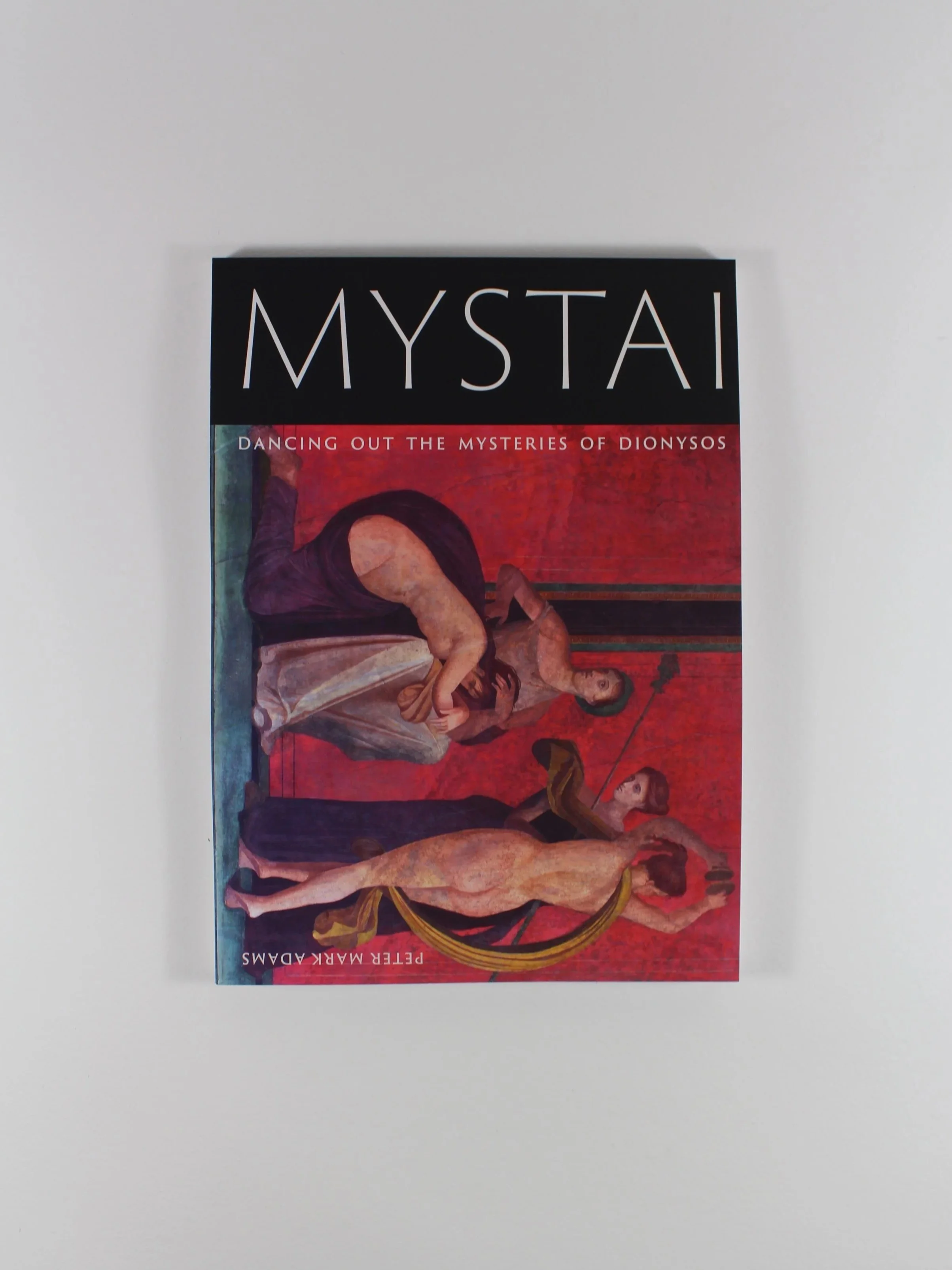
Peter Mark Adams’ Mystai: Dancing out the Mysteries of Dionysos is the only full length, scholarly study of the ritual process of initiation into the mysteries of Dionysos as depicted in the frescoes of Pompeii’s Villa of the Mysteries.
Imperial 8vo (210 × 290 mm, landscape)
192 pp
38 images including colour photographs of the restored frescoes
Issued in 3 editions –
fine / standard hardback / paperback

Two Esoteric Tarots is the record of a fascinating conversation between Peter Mark Adams and Christophe Poncet, convened and with a foreword by César Pedreros. They compare their journeys of discovery into two wildly contrasting tarot decks, the dark ritual landscape of the elite Sola-Busca tarocchi, as revealed in The Game of Saturn, and the luminous and popular Tarot de Marseille, the subject of the forthcoming Tarot of Marsilio.
Scholarly research has firmly maintained that the tarot had no spiritual, esoteric or divinatory dimension before the mid-eighteenth century. However, working independently, Peter Mark Adams and Christophe Poncet have shattered that consensus with their original research, providing abundant evidence that pushes back the date of an esoteric tradition – concealed in plain sight – by almost three centuries.
Readers of The Game of Saturn will find Peter Mark Adams’ most recent thinking here, as he decodes the ritual grammar of a performative theurgy which encompasses the grotesque, the abject and the antinomian in service of a draconian deity and Renaissance statecraft.
Parallel to this, Christophe Poncet discovered Platonic philosophy embedded in the imagery and construction of the Tarot de Marseille. A revelation which propelled him into a profound investigation, unearthing connections between the Florentine aristocracy, the Medici family, Marsilio Ficino, Botticelli, and the heretical philosophical underpinnings of the Italian Renaissance.
When brought into dialogue, Adams and Poncet’s insights converge, to illuminate and fundamentally change our understanding of the tarot, and the submerged currents of the Renaissance, both dark and light, which formed Western esotericism.
A benchmark text for students of the tarot, symbolism, theurgy and performative ritual from two of the leading researchers into the hidden legacy of the tarot.
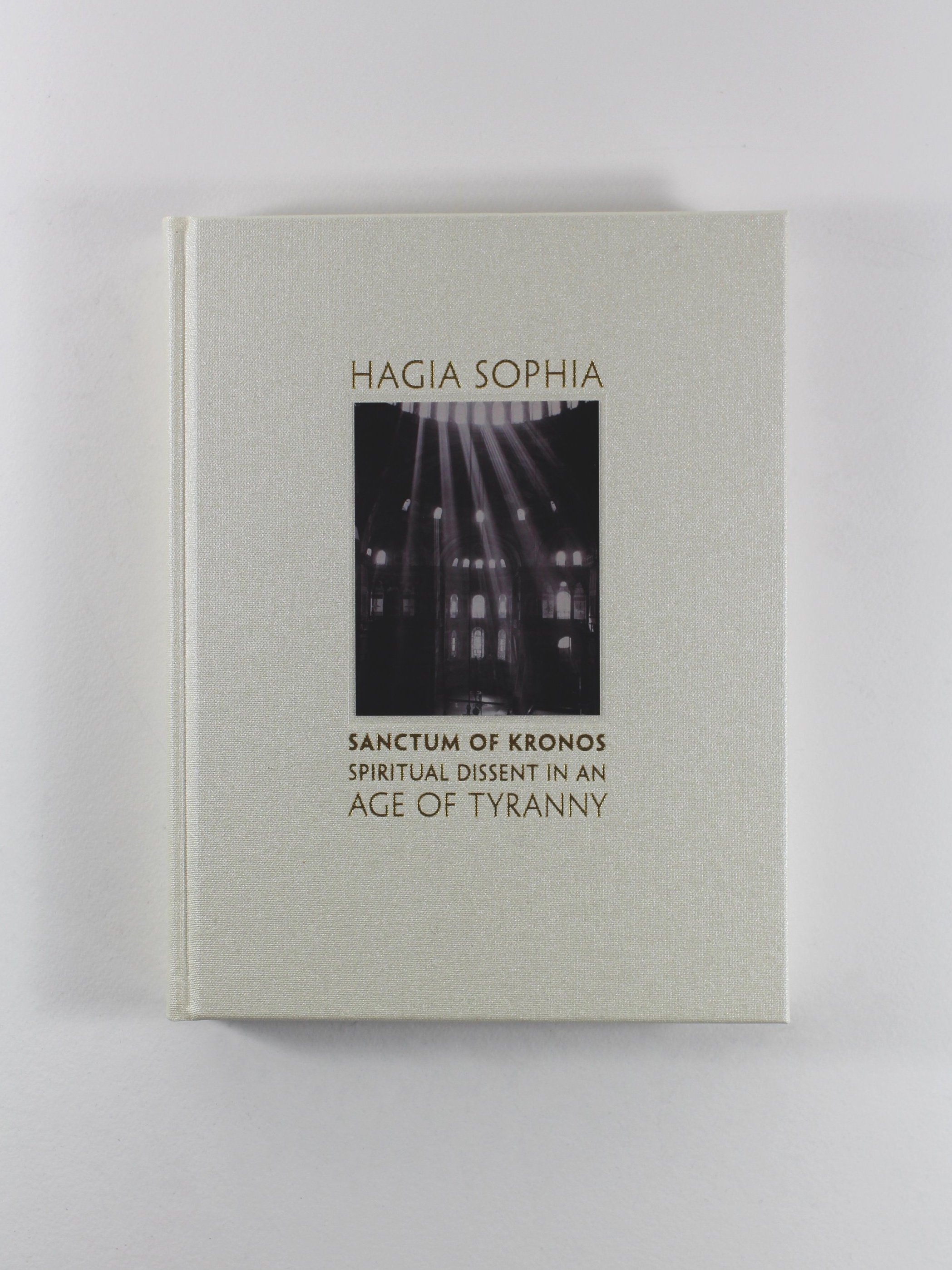
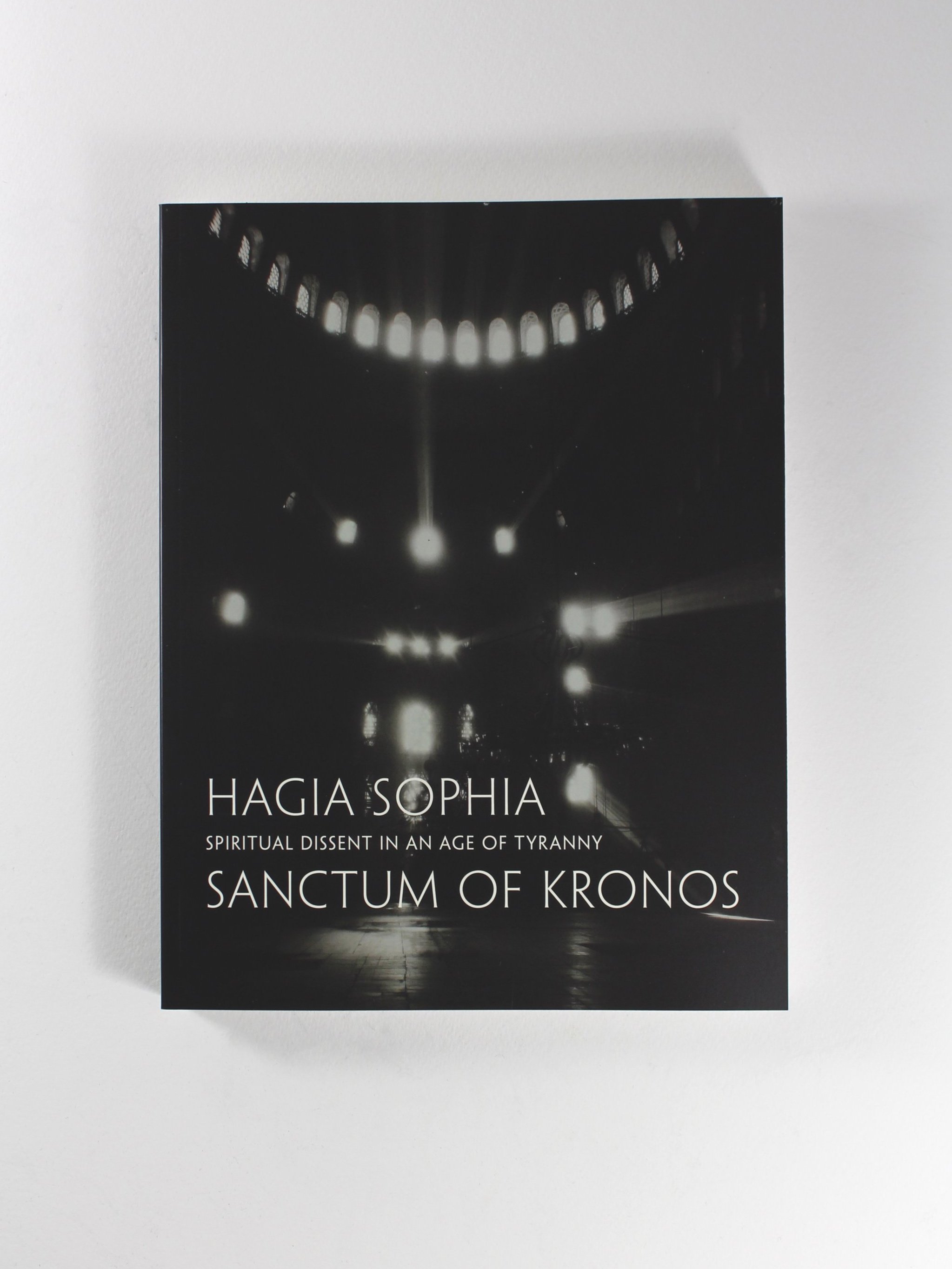
Peter Mark Adams’s in depth study of the esoteric doctrines and spiritual traditions encoded within the Hagia Sophia, as manifested in its structural and decorative design.
Crown 4vo (245 × 189 mm)
240 pp
Specially commissioned colour photographs of the marble revetment; black & white studies in light; and architectural drawings.
Issued in 4 editions –
fine / standard hardback / paperback / digital

Hagia Sophia / Sanctum of Kronos: Spiritual Dissent in an Age of Tyranny is a study of the esoteric doctrines and spiritual traditions encoded within the Hagia Sophia, as manifested in its structural and decorative design.
The Hagia Sophia is one of the world’s most iconic buildings, but its origins in Late Antiquity conceal a sacred mystery preserved in the face of rising Christian tyranny. It is a building that encodes its spiritual agenda, in stone, resonance and light.
Peter Mark Adams has lived for thirty years in sight of the Hagia Sophia, and has turned his expertise to decoding the teachings expressed in the sacred architecture, materials, light and geometries of this remarkable and compelling edifice. He writes, ‘It is possessed of its own distinctive atmosphere, a frisson or feeling-tone at once sublime but at the same time, quite alien; and it was this, this indisputable phenomenologically attested sense of the extraordinary occluded beneath the accretions of its various identities, that bid me commence the present project; that of exploring its metaphysical origins.’
Adams focusses on paring the building back to its original form, as it stood in the sixth century ce. Though now obscured by some 1500 years of appropriation, re-inscription and botched restorations, remarkably, much has been preserved, hidden in plain sight, and from that we can ascertain the metaphysical aims of its architects. Adams transports the reader into the spiritual and esoteric world of Hellenism in Late Antiquity; a world that suffered violent oppression, its metaphysical outlook and spiritual practices criminalised, its practitioners variously exiled, tortured or executed and its texts burned.
The spiritual origins of this tradition originated with Nestorius, the last legitimate Eleusinian Hierophant, and his son, Plutarch of Athens, a priest of Asclepius. Its executor, however, was none other than Plutarch’s daughter, Asclepigenia. Almost unknown today, she was arguably the last and greatest High Priestess of Antiquity, initiating and training some of the greatest intellects of the age – Syrianus, Hermias, Proclus, Ammonius and many others – who came to study within the newly created School of Athens. There they imbibed a performative theurgical spiritual tradition that was, in turn, conveyed to its various offshoots in Asia Minor and the great Hellenistic schools of Alexandria.
For almost a thousand years, Eleusis had been the greatest sanctuary within the ancient world, and its rites the most revered and archaic mysteries of the gods. With its sanctuary destroyed by monks in 395 ce and its rites prescribed by Imperial decree, the holders of the thousand year old initiatory lineage embarked upon a mission to preserve the essential core of its spiritual message.
Hagia Sophia / Sanctum of Kronos traces the unfolding of this project over the course of almost two centuries, culminating in the construction of the Hagia Sophia or ‘Holy Wisdom.’ Designed by initiates of the school of Alexandria it encapsulates the metaphysics of spiritual union as taught within the Eleusinian tradition – in defiance of Imperial religious decrees, persecution and oppression – to preserve a true, faithful and timeless narrative of spirituality. Hagia Sophia / Sanctum of Kronos interprets the clues left embedded within the building itself; and locates their source and hidden significance, travelling back across the ancient Hellenistic world from Asia Minor to Alexandria and Athens until we arrive at the gates of Eleusis itself.
Part I, The Golden Chain, establishes the metaphysical and spiritual lineage of the building’s designers; a journey that takes us to the school of Athens; a school specifically established to preserve the initiatory lineage of the mysteries of Eleusis. From Athens it traces the golden chain of initiatic succession to Alexandria, and from there to Tralles, Miletus and Aphrodisias in Asia Minor – the last great Ionian centres of Hellenism and rural paganism. Finally, it examines covert Hellenist, Procopius of Caesarea’s reactions to the building in the sixth century – shortly after the building had been completed.
Part II, Sacred Landscape / Sacred Architecture, explores the key tenets that govern the sacrality of landscapes and by extension, sacred structures.
Part III, The Immateriality of Stone, reads the visual language of the building itself, both structurally and decoratively; and decodes the clues left for us by its designers 1,500 years ago.
Part IV, The Return of the Golden Age of Kronos, concludes the quest by unveiling the hidden landscape of the soul encoded and occluded within the building’s structure. This work is, ultimately, about the recovery of a shared spiritual legacy of which the esoteric communities of today are direct spiritual descendants.
The Game of Saturn is the first full length, scholarly study of the enigmatic Renaissance masterwork known as the Sola-Busca tatrocchi. It reveals the existence of a pagan liturgical and ritual tradition active amongst members of the Renaissance elite and encoded within the deck. This work explores the historical context for the deck’s creation against the background of tense Ferrarese-Venetian diplomatic intrigue and espionage. The recovery of the deck’s encoded narratives constitutes a significant contribution to Renaissance scholarship, art history, tarot studies and the history of Western esotericism.
Mystai: Dancing out the Mysteries of Dionysos is a grand-breaking study of the ritual process of initiation into the mysteries of Dionysos as depicted in the frescoes of Pompeii’s Villa of the Mysteries.
Hagia Sophia / Sanctum of Kronos: Spiritual Dissent in an Age of Tyranny is a study of the esoteric doctrines and spiritual traditions encoded within the Hagia Sophia, as manifested in its structural and decorative design.
Two Esoteric Tarots is the record of a fascinating conversation between Peter Mark Adams and Christophe Poncet, convened and with a foreword by César Pedreros. They compare their journeys of discovery into two wildly contrasting tarot decks, the dark ritual landscape of the elite Sola-Busca tarocchi, as revealed in The Game of Saturn, and the luminous and popular Tarot de Marseille.